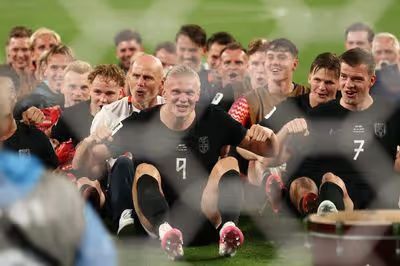
Lionel Messi, Kylian Mbappé and Erling Haaland stole the headlines on Day 12, each reinforcing their Golden Boot bids as Argentina, France and Norway clinched early knockout spots. Rankings have shifted: perennial powers show form while pre-tournament favourites like Portugal and Senegal raise questions. Below is a concise, analytical World Cup power ranking and what the trends mean for the knockout picture.
World Cup snapshot: leaders, shocks and the Golden Boot race
Lionel Messi, Kylian Mbappé and Erling Haaland continue to define this tournament. Messi’s clinical finishing has put Argentina on cruise control; Mbappé’s double against Iraq confirmed France’s balance between creativity and pace; Haaland remains Norway’s out-and-out closer.
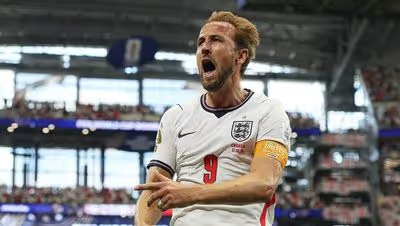
Those three set the tone for the Golden Boot chase and underline why Argentina, France and Norway qualified with a game to spare.
Why it matters
Early qualification matters for squad management and momentum. Teams that top their groups can rest key players and shape favorable last-16 ties. Conversely, underwhelming group displays force tactical overhauls and risk early exits for sides who arrived with high expectations.
Top 10: form, threats and immediate implications
1. France — Momentum and Mbappé
France look as dangerous as ever. Mbappé’s finishing and Michael Olise’s emergence at No.10 have given Didier Deschamps a functioning attack. A final group game against Norway will decide top spot, but France have found balance between flair and control.
2. Argentina — Messi carrying a title bid
Messi has scored all of Argentina’s goals so far and now leads the tournament scoring charts. Clean sheets and calm control in midfield make Argentina a complete package — though Cristian Romero’s knee issue is a wrinkle to monitor.
3. Germany — clinical when it counts
Germany’s 7-1 thrashing and a dramatic comeback against Ivory Coast signal ruthless depth. Julian Nagelsmann has momentum and options off the bench that win matches late.
4. England — attacking verve, defensive questions
England’s 4-2 win showed firepower from Kane, Bellingham and Rashford. Thomas Tuchel has attacking solutions; the defence will need tightening before the knockouts.
5. Spain — response after early wobble
Spain answered a poor start with a dominant 4-0 win. Young Lamine Yamal’s emergence and creative overload make Spain dangerous if they sustain intensity.
6. Netherlands — attacking clarity
The Netherlands’ attacking interchange, led by Brobbey and Gakpo, sent a statement. Tunisia should determine whether they finish top.
7. Brazil — restored balance
After a shaky opener, Brazil’s 3-0 win over Haiti reset expectations. Ancelotti’s choices in attack matter and Matheus Cunha has made a persuasive case for selection.
8. Morocco — compact and efficient
Morocco’s blend of defensive organisation and Ismael Saibari’s goals keeps them a serious Group C contender. A big win against Haiti would secure even more breathing room.
9. United States — excitement and control
The USMNT are playing with one of the tournament’s most enjoyable attacking setups. Already through, Mauricio Pochettino can rotate and preserve legs for a deep run.
10. Norway — Haaland’s power offset by defensive cracks
Haaland’s goals have masked some defensive fragility. Norway can outscore opponents, but a tougher defensive test in the knockouts will expose weaknesses.
Mid-table movers and notable progress
Mexico’s early qualification and top spot in Group A is a major story — home advantage and clean sheets have steadied the co-hosts. Colombia lead Group K thanks to work-rate and clinical finishing. Japan’s historic 4-0 win signaled tactical clarity and pressing efficiency. Canada’s 6-0 rout of Qatar announced them as a surprise force with Jonathan David firing. Switzerland, Belgium and Germany show depth, though Belgium’s performances remain inconsistent relative to their FIFA ranking.
Underperformers and cause for concern
Portugal’s draw with DR Congo and Cristiano Ronaldo’s subdued tournament raise alarm bells. Uruguay’s wastefulness and fragile defence have limited their progress despite attacking volume. Senegal have failed to register points and must rediscover cohesion or face an early exit. Turkey’s two-game drought without a goal is inexplicable given their personnel. Saudi Arabia’s heavy defeat to Spain underlined a gulf in class when they face top teams.
Breakout stories and dark horses
Cape Verde are the tournament’s delightful anomaly — unbeaten and capable of toppling bigger names. Ecuador’s early struggles despite healthy xG figures expose finishing problems. New Zealand remain stubborn and can upset the balance if Belgium underestimates them. Algeria’s set-piece threat and Ghana’s late resilience make both dangerous in tight fixtures.
Injuries, tactics and managerial pressure
Injuries to defenders like Cristian Romero and goalkeeper absences such as Edouard Mendy matter: defensive stability is the backbone of any deep run. Managers who rotate intelligently — protecting stars like Messi and Mbappé while maintaining team rhythm — will gain an edge. Conversely, teams leaning too heavily on single superstars risk elimination if form dips or opponents adapt.
What to watch next — fixtures that will reshape rankings
The final group matches will crystallize the knockout map. Key ties: Norway vs France for Group A supremacy, Spain vs Uruguay in Group H, and Mexico’s final group fixture determining home-advantage permutations. Expect rotation from already-qualified sides; teams fighting for survival must balance risk and pragmatism.
Conclusion: early trends and knockout previews
The tournament’s opening phase reaffirmed a simple truth: elite finishing and squad depth win group stages. Messi, Mbappé and Haaland have carried their teams and the Golden Boot narrative is already compelling.
Messi rebounds from missed penalty to net two and set World Cup scoring record
As favorites solidify and underperformers scramble for answers, the next round will reward tactical nuance as much as star power.
 Theathleticuk