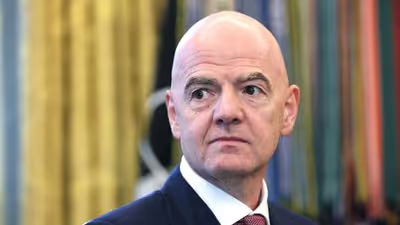
FIFA has abandoned plans to sell a minority stake in a proposed World Cup-focused commercial arm after a high-profile backlash from UEFA and other confederations, which spooked investors and triggered senior departures. The collapse of the Fifa Forward Enterprise leaves Gianni Infantino defending FIFA’s commercial strategy and raises fresh questions about governance and the future monetisation of the World Cup.
FIFA abandons plan to monetise World Cup assets after confederation revolt
FIFA quietly shelved its proposal to create a new commercial vehicle, Fifa Forward Enterprise (FFE), that would have pooled and monetised World Cup-related assets after sustained opposition from UEFA and several confederations.
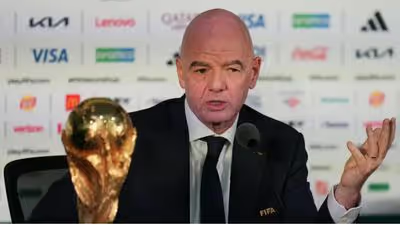
The plan had sought external investment in a minority stake but lost commercial momentum as member unions threatened a boycott and potential bidders withdrew.
What was Fifa Forward Enterprise?
FFE was pitched as a separate entity to centralise World Cup revenues and other commercial opportunities, with FIFA valuing the unit in the multi‑billion-dollar range and seeking to sell a minority stake to private investors. The stated aim was to give member associations a pathway to share in football’s commercial growth, while preserving governance inside FIFA.
Why the plan collapsed
Opposition from UEFA — representing some of FIFA’s largest commercial markets — immediately undercut the proposal’s value. UEFA and numerous national associations warned they would not participate if their flagship competition was effectively commercialised via an outside investor. That threat deterred sponsors and broadcasters and prompted several prospective investors to step back, citing reputational and brand risks.
Investor fallout and reputational damage
With major confederations publicly opposed, the commercial case for selling a stake evaporated. Interest from private equity and strategic buyers dwindled as the probability of securing broadcast and sponsorship deals from the crucial European market fell. What began as a creative funding idea transformed into a commercial and reputational liability for FIFA.
Internal friction and senior resignations
The proposal also sparked internal dissent. A senior adviser resigned in protest, publicly condemning the proposal as damaging to member associations and to the long‑term interests of the sport. That departure hardened the political perception that the project was out of step with the wider football community and amplified calls for greater consultation.
Why this matters: governance, trust and the future of World Cup revenues
The episode exposes a fundamental tension in modern football: the drive to monetise global rights versus the need to keep competitions under federation control. UEFA’s ability to derail the plan demonstrates how concentrated market power among European members can shape FIFA’s commercial trajectory. For fans and national associations, it was a clear demand that core national and tournament assets remain in collective stewardship.
Short-term implications
FIFA must now repair relations with confederations and rebuild trust with member associations. Any future commercial initiative will require far broader, transparent consultation and clearer safeguards to avoid the perception of selling the sport’s crown jewels.
What could happen next?
Expect FIFA to retreat to incremental commercial reforms rather than bold asset sales. The organisation is likely to propose alternative revenue-sharing arrangements, direct investment in member development programs, or structured partnerships that avoid minority-stake sales of marquee assets. The episode may also accelerate internal governance reviews and force a recalibration of Infantino’s reform agenda.
Conclusion
The collapse of the FFE plan is a cautionary tale about the limits of commercialisation in international sport when political buy‑in is absent.
Franco Baresi, Milan’s 'Forever No. 6,' dies aged 66 — legacy of leadership and defensive mastery
FIFA retains the commercial engine of the World Cup, but the trust gap highlighted by this episode will shape how and with whom it does business going forward.
 The Sun