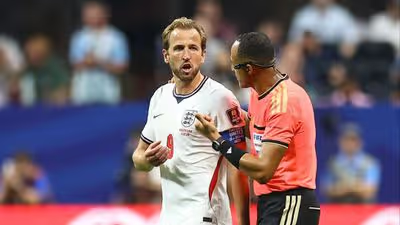
Former Premier League referee Graham Scott says Harry Kane’s repetitive, sarcastic prodding of officials is “irritating” and counterproductive, warning it can bias a referee against a player. Scott flagged similar behaviour from Jude Bellingham and urged England to rethink its on-field approach to referees after their World Cup semi-final defeat to Argentina, saying players risk undermining their own case in tight matches.
Graham Scott criticises Harry Kane’s approach to referees
Graham Scott, a retired Premier League referee, has criticised Harry Kane’s persistent questioning of match officials as irritating and likely to backfire.
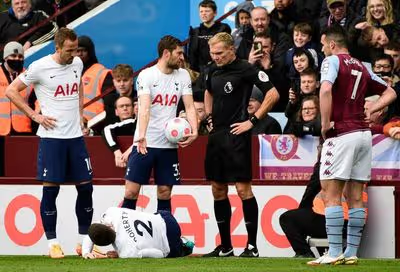
Scott says Kane’s sarcastic, leading comments during games risk creating a negative impression with referees that could influence marginal decisions in tight contests.
What Scott said
Scott described Kane as “very repetitive” in his interactions with officials, using sarcastic lines such as “Is he going to be allowed to do that all day?” to sway decisions. “It just irritates you,” Scott added, arguing that continual prodding often makes referees less inclined to rule in a player’s favour when 50-50 calls arrive.
He also noted he has seen similar patterns in Jude Bellingham, and conceded his observations were based largely on Premier League matches rather than Kane’s time in the Bundesliga. Scott, who retired at the end of the 2024/25 season, warned that persistent gamesmanship can be self-defeating.
Context: England, World Cup and on-field conduct
The comments follow England’s World Cup semi-final loss to Argentina, a high-stakes environment where every marginal decision is magnified. Scott was particularly frustrated by what he saw as England players “chipping away” at the referee during the game; of the England squad only Elliot Anderson received a booking in that match.
Referee management is not just etiquette; it is a tactical factor in knockout football. When a captain or star player adopts an approach that visibly irritates an official, the immediate consequence can be less favourable interpretations of tackles, appeals and contact.
Why this matters
Officials form impressions quickly. Scott’s core point is psychological: a referee who feels antagonised by a player is more likely to rule against them in borderline situations. For England, which often operates on fine margins in major tournaments, that subtle bias can decide outcomes.
The criticism is not aimed solely at Kane’s personality but at the practical effect of his manner on game management. If top players repeatedly attempt the same ploy, referees and opponents adapt, and that tactic loses effectiveness — or worse, becomes detrimental.
What England and managers should consider
Coaches should treat referee management as part of match preparation. Scott suggested teams study how individual referees operate and tailor their approach accordingly rather than defaulting to habitual protest. Practical steps include rehearsed responses to decisions, clearer captain-led communication, and training players to modulate visible frustration.
For Kane and Bellingham, the task is behavioural adjustment: maintain intensity and influence without tipping into repetitive sarcasm that risks alienating officials. That balance preserves on-field authority while protecting the team’s standing with referees.
What could happen next
If Scott’s assessment gains traction among referees and analysts, players known for persistent protest may find fewer sympathetic calls in future matches. England’s coaching staff faces a choice: correct the behaviour and potentially reclaim marginal decisions, or risk continued friction with officials that could cost results in big games.
England’s next competitive fixtures will provide a practical test of whether high-profile players can adapt their approach to officials and whether managers will prioritise referee psychology in their tactical briefings.
 The Sun