


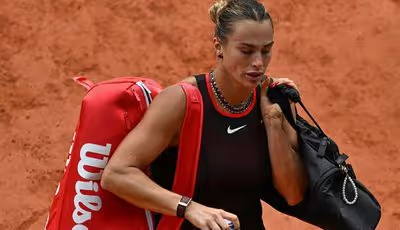
Aryna Sabalenka's shock 3-6, 7-5, 6-0 loss to Diana Shnaider in the French Open quarter-finals ends the world No.1's bid for Roland Garros and exposes recurring late-stage fragility. Favoured in an open draw, Sabalenka surrendered a set and a double-break lead, raising fresh questions about her tactical adaptability on clay and her ability to manage pressure ahead of Wimbledon.
Sabalenka stunned by Shnaider in French Open quarter-final
Aryna Sabalenka, the world No.1 in tennis and pre-tournament favourite, was eliminated from the French Open after a 3-6, 7-5, 6-0 defeat to Diana Shnaider in the quarter-finals. The result is a major upset in Paris and the earliest Grand Slam exit for Sabalenka since the 2024 French Open quarter-finals.
Key facts: scoreline and significance
Sabalenka won the opening set 6-3 and built a 4-1 lead in the second, only to lose 12 of the final 13 games. She finished with 57 unforced errors to 46 winners, a statline that underlines the collapse. In a draw with few established major champions remaining, Sabalenka entered Roland Garros as the overwhelming favorite — and now leaves with fresh doubts about closing out big moments on clay.
How the match unfolded
Shnaider, the Russian underdog, absorbed pressure early and forced Sabalenka into longer rallies as swirling winds increased unpredictability on Court Philippe Chatrier. Sabalenka's aggressive, first-strike game looked effective in bursts but faltered as conditions demanded sharper margins and more angled positioning. After losing the second set, Sabalenka was broken repeatedly in the decider and could not regain a foothold.
Tactical issues and emotional thread
Sabalenka admitted to being over-emotional and preoccupied by the fact she has never won Roland Garros. Those emotions showed in unforced-error counts and in moments where she failed to shift strategy. Analysts noted that windy clay conditions reward patience and margin-based play — adjustments Sabalenka was reluctant or slow to make. This match reinforced a pattern: supreme baseline power paired with occasional tactical inflexibility in pivotal stages.
Context: a dominant player with recurring late-stage setbacks
Over the past two years Sabalenka has been the dominant force in women's tennis, compiling 11 WTA titles and holding the No.1 ranking for extended periods. She has four Grand Slam singles titles (two Australian Open, two US Open), all on hard courts, but has repeatedly struggled to convert favourites’ tag into clay-court majors. She has not lost before the quarter-finals of a Grand Slam since early 2023, yet has a growing list of defeats in finals and late semi-finals.
Recent signs of vulnerability
Sabalenka's Paris exit follows a pattern from the clay-court build-up: missed match points and surrendered leads in Madrid and Rome showed fragility in tight moments. Those results hinted at a player in fine physical condition but still searching for a reliable mental and tactical response when matches tilt.
What this means for Roland Garros and Wimbledon
Sabalenka’s elimination opens the title race in Paris. Remaining contenders include Diana Shnaider, qualifier Maja Chwalinska, Mirra Andreeva and Marta Kostyuk — none carry Sabalenka’s ranking pedigree but all now have a realistic path to the trophy. For Sabalenka, the loss is a prompt to reassess in-season strategy: if she wants to add Roland Garros to her résumé she must show clearer in-match adaptability on clay.
Looking ahead to grass and Wimbledon
Despite the disappointment, Sabalenka remains a serious threat for Wimbledon. She has reached the semi-finals at SW19 in each of the past three appearances and has repeatedly stated confidence on grass. The immediate task is psychological reset and tactical sharpening: temper aggression with margins in volatile conditions and install a reliable plan B for long rallies.
Takeaway
This defeat is more than a single upset; it is a reminder that even dominant champions must evolve.
French Open to fine Adolfo Daniel Vallejo after saying match needed to be ‘umpired by a man’
Sabalenka’s power game is elite, but on clay — and under swirling conditions — the ability to temper aggression, reduce errors, and manage emotion will determine whether she can convert favourites’ status into another Grand Slam title.
 Yahoo! News


