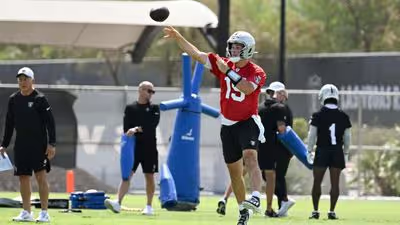
Breaking: The Las Vegas Raiders intend to keep No. 1 pick Fernando Mendoza on the bench for much of 2026, handing starting duties to veteran Kirk Cousins — a contentious redshirt plan that clashes with recent trends of elite rookie quarterbacks playing early.
Raiders plan to ease Fernando Mendoza in, Cousins expected to start
The Raiders entered the 2026 NFL offseason with a clear decision: use veteran Kirk Cousins as the on-field starter while Fernando Mendoza, the No. 1 overall pick, develops off the field.
Head coach Klint Kubiak and the new regime appear willing to run a “redshirt” year for Mendoza, delaying his full-time debut even as regular-season pressure mounts.
What the plan actually looks like
Reports indicate Las Vegas will give Mendoza a measured introduction — extensive practice reps, game-planning reps as the backup, and limited in-game action unless circumstances force a change. Cousins is expected to carry the day-to-day starter’s load and the immediate win-now responsibilities.
Why the Raiders might prefer patience
Mendoza arrives with a long college resume, including an outstanding season at Indiana, a championship pedigree and a Heisman-level profile. That background supports an argument for allowing him to acclimate to the NFL’s speed and a new offensive system without the crucible of Week 1 pressure. Ownership influence and organizational philosophy appear to favor mental preparation and long-term floor over instant exposure.
Why this approach clashes with recent QB trends
The modern draft era shows a strong pattern: elite rookie quarterbacks typically get early live reps. Many top selections in the last two decades were thrust into starting roles quickly and developed through in-game experience. That pathway has produced rapid ascents more often than it has confirmed long-term busts, suggesting there is measurable upside in letting a new QB play early rather than keeping him idle.
Why this is controversial
This strategy creates a direct tension between draft logic and development theory. The Raiders used the top pick on Mendoza because evaluators viewed him as pro-ready and high-floor — someone who could stabilize the position sooner rather than later. Sitting a player with that profile risks stalling growth that typically accelerates when rookies face real-game adversity, while also inviting impatient fan and media pressure if early-season losses pile up.
What Mendoza’s profile says
Mendoza arrives as a 35-game college starter who’s handled both rebuilding projects and championship-level pressure. That résumé argues for immediate value: situational poise, decision-making under duress and a track record of improvement across different systems. Those traits are exactly why teams usually expect early contributions from a top pick.
Organizational dynamics and practical limits
Keeping a rookie QB on the bench is easier in theory than in practice. Injuries, a misfiring offense, or the simple reality of mounting losses can force a switch faster than coaches plan. Even if ownership and staff want patience, in-season realities often rewrite developmental timelines.
Implications for Mendoza and the Raiders
For Mendoza, a redshirt year would grant practice reps and mental study time, but it reduces live-game learning that builds timing, feel and confidence. For the Raiders, the decision buys short-term stability with Cousins but risks delaying the evaluation of the franchise’s most important asset and slowing the rebuild’s timeline.
What to watch next
Training camp and the early regular season will be the decisive period. Look for clear signals in preseason reps, how the offense is tailored to Cousins versus Mendoza, and whether the team opts for conservative play-calling that minimizes Mendoza’s exposure or positions him to step in quickly if needed.
Bottom line
The redshirt route is defensible as a risk-management strategy, but it conflicts with why the Raiders invested the top pick in Fernando Mendoza.
After World Cup turf swaps, Caleb Williams presses NFL to prioritize natural grass and player safety
Given recent patterns showing the benefits of early rookie playing time, Las Vegas is choosing patience at a meaningful cost: delayed clarity on Mendoza’s ceiling and heightened pressure to win now without assessing the player most likely to define the franchise’s future.
 Yardbarker