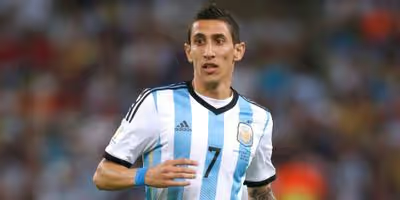
Angel Di María has reignited tensions by calling Argentina’s 2-1 World Cup semi-final win over England the tournament’s high point, saying the World Cup “ended” for him with that victory. His comments have provoked online backlash and reopened debates about Argentina’s conduct, political overtones and the fallout from the controversial final.
Di María’s Remarks Stoke the England-Argentina Row
Angel Di María, now at Rosario Central, publicly praised Argentina’s comeback win over England as the crowning moment of the World Cup and urged Lionel Scaloni and Lionel Messi to remain with the national team. That framing — treating the semi-final as the tournament’s pinnacle — was read by many as a deliberate slight toward England.
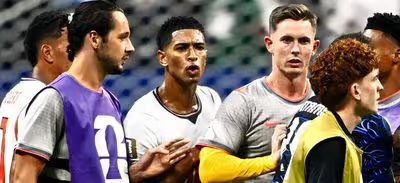
Social media reaction was immediate and sharp, with critics calling the comments tone-deaf given the wider controversy surrounding the final. The backlash underlines how sensitive the England-Argentina narrative remains more than a year after the tournament.
Context: A Tournament Still Generating Heat
Argentina’s World Cup victory in 2022 brought euphoria at home, but the celebrations were followed by incidents that have kept the team under scrutiny. Post-match scenes from the final included confrontations and physical exchanges involving staff and players, which extended the story beyond the pitch.
Political elements compounded the tension. Public displays and chants blurred sport and national sentiment, while high-profile criticism of foreign coverage and actions from Argentina’s leadership have fed a siege mentality among sections of players, staff and supporters.
Public Backlash and the Petition
A petition calling for Argentina to face punishment reportedly gathered millions of signatures, a sign of how polarising the aftermath has become internationally. That level of public response matters because it shifts the debate from sport to reputation management for the Argentine FA and for the players themselves.
Why Di María’s Comments Matter
As an experienced international figure, Di María’s words carry weight. Celebrating the England victory as the zenith of the campaign reframes what many expected to be a unifying message after a World Cup run. Instead, it risks deepening divisions with opposing supporters and feeding a narrative that Argentina emphasizes rivalry and grievance over the final itself.
For Messi and Scaloni, the reaction is a reminder that leadership extends beyond tactics and goals. Public perception now forms part of the legacy they must manage.
Implications for Argentina’s Image and Future Fixtures
The immediate sporting implications are limited — Argentina remain a top national side with a roster anchored by Messi. But the reputational damage is tangible: disputes over conduct, the perception of a siege mentality, and highly visible public criticism can influence how referees, media and rival fans frame future encounters.
If Argentina wants to defuse lingering tensions, the federation and senior players will need to adopt a conciliatory public posture and address the fallout from post-final incidents directly.
What to Watch Next
Will Scaloni and Messi commit to staying together and guide the country through the PR and sporting challenges? Will the Argentine FA take steps to repair relations with international colleagues and fans? How the team handles upcoming friendlies and competitive fixtures will reveal whether this controversy is a temporary storm or a structural problem in how the national side presents itself.
World Cup hero Vozinha signs 18-month deal with Colo-Colo to boost Chilean title bid
The football story remains clear: Argentina are elite on the field. The narrative off it, however, now requires careful management if their global standing is to match their status as World Cup champions.
 Givemesport