Carlie Irsay-Gordon’s hands-on approach on the Indianapolis Colts’ sideline has roiled a franchise already in flux after she fired general manager Chris Ballard nearly two weeks ago, with the team sitting at 2-5 and several veterans moved in trades that signal a rebuilding direction.
Owner visibility and the rationale she gives
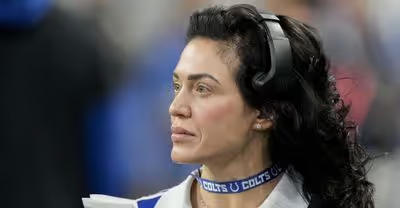
Irsay-Gordon, who has been involved with the franchise for more than a decade and ascended to the top roles in recent seasons, has made sideline access and a headset part of her routine at games. She has described that presence as an educational tool, saying the headset “has really helped me learn” and that watching games up close helps her evaluate whether staffers are “full of BS” and whether they know what they’re talking about. That explanation dates to comments she made in June 2025 about accelerating her learning after earlier front-office experiences.
Those remarks reflect a posture Irsay-Gordon has maintained since taking a more prominent role in team operations: she has said being on the field during games gives her the best possible understanding of how the organization functions.
Public pushback and what critics say
The visibility has not been universally welcomed. Former Colts quarterback Sean Salisbury criticized Carlie Irsay-Gordon’s in-game sideline presence, saying, “I told you when the season started when an owner stands on the sideline taking notes, you’re f*cked.” Salisbury also acknowledged that Irsay-Gordon has a right to be involved as the team's owner but said her sideline presence could rub players the wrong way.
Other commentators have echoed the discomfort. The Comeback noted that voices like Bill Simmons have said they’ve “seen enough” of Irsay-Gordon’s sideline behavior, and Salisbury warned that players can resent feeling micromanaged — a theme repeated by detractors who view owner-level proximity during play-calling and in-game adjustments as overreach.
Those critiques arrive amid organizational moves. The Colts’ 2-5 start and recent trades of veterans DeForest Buckner and Quenton Nelson have been read as signposts of a pivot toward a full rebuild rather than a bid to salvage the 2026 season. The firing of Chris Ballard, executed by Irsay-Gordon, is the most visible example of that shift.
What is confirmed, and what remains interpretation
It is established that Irsay-Gordon dismissed Ballard during his 10th season with the franchise and that the roster moves and 2-5 record have skewed public conversation toward rebuilding. Irsay-Gordon’s explanation for her sideline role — that it accelerates learning about coaches and personnel — is also on record from her 2025 comments.
Beyond those facts, assessments of the sideline presence’ effects on player morale or long-term organizational health remain opinions. Salisbury’s contention that players “do not like to feel like they’re being micro-managed” is an interpretation he voiced publicly and that has been amplified by pundits; it is not a documented internal finding. Similarly, suggestions that the owner’s proximity directly caused specific on-field failures are offered as analysis rather than established causation.
What is clear is that the optics of an owner standing with a headset, actively observing and communicating during games, now exist alongside roster shakeups and executive turnover. For a franchise that has entered what many see as a fire sale, that combination has sharpened questions about decision-making, accountability and the appropriate boundaries between ownership and on-field staff.
Irsay-Gordon’s presence on the sideline will likely remain a lightning rod for debate as the Colts navigate roster construction and leadership changes. For now, her stated intention — to better understand and evaluate the people running the team — sits in tension with critics who argue that in-game involvement crosses lines that can disrupt a locker room and complicate coaching authority.