June Jones, the former NFL player and coach whose offensive ideas reshaped programs from Atlanta to Hawaii and into professional spring football, has died at the age of 73. The Atlanta Falcons released a statement mourning his passing, calling him "a visionary in the passing game" and extending "our deepest condolences to his family, friends, and all who knew and loved him."
Career and offensive impact
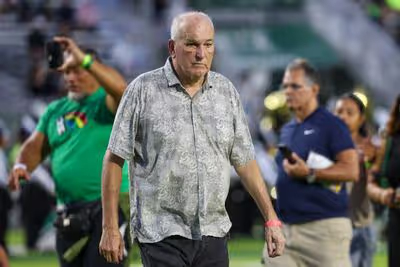
Jones spent more than five decades in football as a player and coach, gaining a reputation for offensive innovation and for popularizing the run-and-shoot passing attack. He began his playing career as a quarterback at the University of Oregon in 1971 and went on to sign with the Atlanta Falcons after not being selected in the 1977 draft, spending four seasons with the club.
Returning to Atlanta as offensive coordinator in 1991, Jones brought his explosive run-and-shoot offense and was promoted to head coach in 1994. He was Atlanta's head coach for three seasons and led the team to a Wild Card berth in 1995.
Jones later became a prominent figure in college football and alternative professional leagues. He coached in Hawaii through the 2000s and moved on to SMU in the late 2000s and early 2010s. He also worked at the high school level and held head-coaching roles in other professional leagues, including a stint with the CFL's Hamilton Tiger-Cats and as the head coach of the XFL's Houston Roughnecks in 2020. Jones was named XFL Coach of the Year after the Roughnecks opened the abbreviated season 5-0 before play was halted due to the COVID-19 pandemic.
Legacy, reactions and final days
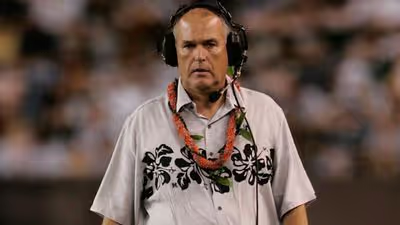
Beyond wins and losses, Jones' influence is measured by the quarterbacks and offenses that adopted his aggressive passing philosophy and by programs that experienced renewed national attention under his leadership. Hawai'i announced Jones' passing while crediting him as "a leader, coach, mentor and innovator who helped bring Hawai'i Football to unprecedented heights."
Peers and former players have long pointed to Jones' willingness to adapt and to teach the passing game as central to his legacy. The Falcons' brief tribute captured that thread, thanking him for "the lasting impact he made on those he coached and mentored."
Hal Mumme told The Athletic that Jones had entered hospice care earlier this month after doctors discovered a tumor while treating him for back pain; Jones died Thursday at the age of 73.
Jones' career threaded professional, college and developmental football for more than half a century. Teams, former players and coaching peers will remember him for an offensive vision that left a clear imprint on how the passing game is taught and played.