Alphonso Smith Jr., a former NFL cornerback, died by suicide Wednesday in Florida at the age of 40, authorities and people close to the situation confirmed. Hours before his death, Smith shared a troubling social-media message in which he called himself a “coward,” referenced abuse he suffered as a child and wrote that he had been struggling with “demons,” apologizing to people he believed he had hurt and saying he needed help.
Circumstances and Smith’s final messages
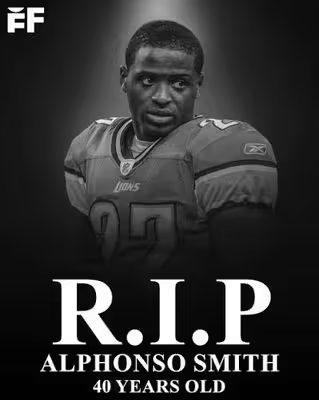
The post that preceded Smith’s death made clear he was in distress. In the message he described internal struggles — using the word “demons” — and issued apologies, language that friends and observers have pointed to as a cry for help. He also explicitly called himself a “coward” and referenced childhood abuse, signaling deep, long-standing pain surfaced in those final hours.
Officials and people with direct knowledge of the situation reported that Smith died in Florida. The nature of his death has been identified as suicide.
Career outline and public profile
Smith emerged as a high-profile collegiate cornerback before reaching the NFL and spent multiple seasons at the professional level. He began his NFL career with the Denver Broncos and went on to spend three seasons with the Detroit Lions from 2010 through 2012.
Those who followed Smith’s career remember him for his athleticism on the field. His peers and former teammates will now also be remembering the private struggles that are increasingly visible in public statements and social-media posts from former players.
What Smith’s death exposes about mental health in football
Smith’s passing, and the painful tone of his final message, has renewed focus on mental-health challenges within the football community — from current players coping with injury, transition and public expectations to veterans confronting trauma after their careers end. His reference to childhood abuse and to battling “demons” underscores that the pressures players face are not limited to the field.
While teams and leagues have invested in a range of programs over the years, Smith’s death illustrates how acute and private these struggles can be, even for players who were once in the national spotlight. Public disclosures like Smith’s do not erase the difficulty of intervening in time, but they do create an urgent moment for teams, player associations, mental-health professionals and communities to examine how support is delivered and how accessible help truly is.
Smith’s post also highlights the complicated role of social media as both a conduit for reaching out and a record of crisis. Public platforms allow players to signal distress, but they do not substitute for immediate, sustained clinical care and community support.
Calls for action and a needed conversation
Smith’s death is an individual tragedy and part of a broader pattern that has prompted repeated calls for improved mental-health services tailored to athletes’ needs. His situation suggests several priorities for the football community: making confidential, immediate mental-health care available; expanding outreach to former players who have left team structures behind; and developing better pathways for friends, family and teammates to intervene when a player signals distress.
No single change would erase the loss of Alphonso Smith Jr., but his final words — about shame, apology and the need for help — should deepen the conversation about how football institutions and communities respond to mental-health crises. Advocates say that candid public discussion, paired with practical investment in care and easy routes to help, can save lives.
As details surrounding Smith’s death continue to be handled by authorities and loved ones, the message he left behind has already prompted reflection across the sport: the talent and toughness celebrated on game day can coexist with hidden pain, and that reality demands sustained attention from everyone involved in the football world.