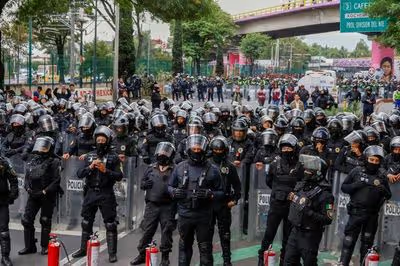
Mexico City prepares for a fraught World Cup 2026 opener at the Azteca as Mexico faces South Africa and Shakira headlines the opening ceremony. Large-scale protests — by teachers, judges, animal-rights activists and families of some 130,000 missing people — have intensified security concerns, prompting heavy police deployments and last-minute contingency plans around the stadium and city streets.
World Cup opener overshadowed by protests in Mexico City
The curtain rises on World Cup 2026 amid a tense backdrop. Mexico vs South Africa, a rematch of the 2010 opener, will kick off at the Estadio Azteca after an opening ceremony featuring Shakira. In the run-up, Mexico City has seen sustained demonstrations from varied groups, raising logistical and reputational challenges for organizers and local authorities.

Key facts at a glance
Mexico hosts the opening match at the Azteca, with the ceremony and match scheduled on the same night. Protesters include teachers, judges, animal-rights activists and relatives of roughly 130,000 missing people. Authorities have increased police presence and adjusted security plans to protect fans, performers and stadium operations.
Who is protesting and why it matters
The demonstrations are not a single-issue event. Educators have mobilized over labor and funding disputes; judges have signaled concerns about institutional reforms; animal-rights groups target specific elements of public spectacle; and families of the missing demand accountability and visibility. Combined, these groups are transforming private grievances into a public test of Mexico City's capacity to host a global spectacle.
Stadium preparations and the opening ceremony
The Azteca has been prepped for both showmanship and crowd control. Organizers have tightened ingress windows, reinforced perimeter fencing and established segregated fan routes. Shakira’s performance adds star power and global attention, increasing the imperative to ensure the ceremony proceeds without disruption. Operationally, the priority is clear: deliver a seamless broadcast event while managing the unpredictable variables outside.
Security response and operational challenges
Authorities have deployed significant police resources and instituted checkpoints across key approach routes to the stadium. That response addresses immediate safety concerns but brings its own risks: heavy-handed tactics could escalate tensions, while insufficient presence risks breaches. The real test is coordination — law enforcement, stadium operations and municipal services must synchronize in real time to prevent delays, clashes or an evacuation scenario.
What this means for Mexico’s national team
For El Tri, home advantage now carries a heavier emotional weight. A charged atmosphere can lift players when crowd energy is positive, yet off-field disturbances can distract preparation and focus. Head coaches and team staff will need to shelter players from noise and narrative while keeping them mentally primed for an opener that sets the tone for Mexico’s tournament ambitions.
Wider implications for the tournament and host cities
How authorities handle these protests will shape perceptions of Mexico’s—and by extension North America’s—readiness to host a World Cup of this scale. Effective, proportionate crowd management and transparent communication can defuse tensions; missteps risk diplomatic and media fallout that could overshadow the sporting spectacle. Organizers must balance security with respect for civic expression to avoid fuelling further unrest.
How the opening night is likely to play out
The most probable outcome is that the ceremony and match proceed with heightened security and some disruption in the city’s transport network. Peripheral protests are likely to persist, but large-scale interference with the stadium event would represent a significant escalation that most groups and authorities appear keen to avoid. Close monitoring and rapid response will be decisive.
Looking ahead
Expect organizers to refine protocols as the tournament progresses. The persistence of varied protests signals that social issues will remain part of the narrative in host cities. For the World Cup to leave a positive legacy, authorities and football bodies will need to engage constructively with local communities, not only to ensure safety but to address the grievances that are spilling into the public arena.
World Cup 2026: Why is the Azteca called the Mexico City Stadium?
Bottom line: The opening night promises spectacle and passion — but also a reminder that mega-events do not exist in a vacuum. Delivering a successful World Cup opener in Mexico City requires operational excellence on the field and political sensitivity off it.
 The Mirror Us