Breaking: Mexico’s iconic Estadio Azteca will be listed as Mexico City Stadium for the World Cup after a temporary rebrand to comply with FIFA’s commercial rules, sidelining its Banorte sponsorship and trimming capacity to 72,766 for five scheduled matches — including the tournament opener, Mexico vs South Africa.
Estadio Azteca temporarily renamed Mexico City Stadium for World Cup
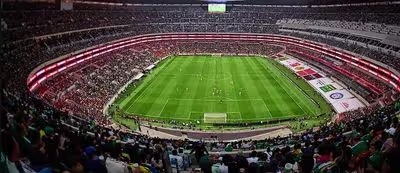
Estadio Azteca, the long‑time home of Club América and the Mexico national team, has been officially renamed Mexico City Stadium for the duration of the World Cup. The venue — which normally holds up to 83,264 spectators but will be limited to 72,766 for the tournament — will forgo its current sponsored title, Estadio Banorte, to comply with FIFA’s strict commercial policies.
Why the name change matters
FIFA prohibits non‑official commercial branding inside tournament venues, including sponsored stadium names. That forces stadium owners and sponsors to remove or mute corporate identities to protect tournament partners. The result is a temporary erasure of a high‑profile brand association for Banorte and a more neutral presentation of one of football’s most famous stadiums.
Which venues are hosting in Mexico
Mexico City Stadium is one of three Mexican venues selected for the competition. The other two are Guadalajara Stadium (Estadio Akron) and Monterrey Stadium (Estadio BBVA). All three face similar branding restrictions while hosting World Cup fixtures.
Matches scheduled at Mexico City Stadium
There are five matches slated for the Mexico City venue: three group‑stage games — Mexico vs South Africa, Uzbekistan vs Colombia and Mexico vs Czech Republic — plus two knockout ties, a round‑of‑32 fixture and a round‑of‑16 match. The tournament opener in Mexico City is the Group A clash between Mexico and South Africa, scheduled for Thursday, June 11 at 8pm UK time (1pm ET).
Commercial and cultural implications
This temporary renaming is more than a legal formality. Estadio Azteca is a cultural landmark; removing the Banorte name restores a neutral, FIFA‑sanctioned label but also strips local sponsors of high‑visibility exposure. For Banorte, the lost branding window in a global event is a clear commercial concession. For fans, the change is symbolic — the stadium’s history remains, but its modern corporate identity is muted on the world stage.
Operational and fan experience considerations
Practical work follows the announcement: stadium signage, LED boards, printed materials and broadcast graphics must be adjusted. Organizers will also manage reduced capacity and traffic flows for five high‑profile games. For Mexico’s national team, opening the tournament at home intensifies expectations; officiating, pitch condition and crowd management will all be scrutinized under the brighter global lens.
What this means going forward
Once the tournament ends, the stadium is expected to revert to its sponsored title and previous operational setup.
The episode underscores how global competitions can temporarily reshape local commercial arrangements — and how clubs, sponsors and city authorities must plan contracts with high‑profile events in mind. For now, Mexico City Stadium will host fans and drama while its corporate badge sits on the sidelines.
 Mirror