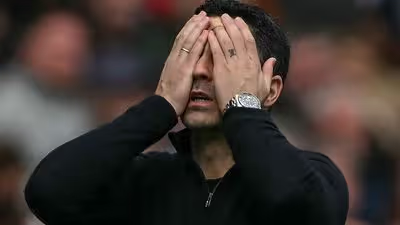
Arsenal return from the World Cup with a stretched squad and alarm bells ringing over key players’ fitness. Declan Rice’s 5,482 minutes across 69 games epitomise the exhaustion, while Bukayo Saka and William Saliba carry niggles that threaten Mikel Arteta’s tight pre-season window as the champions prepare to defend the Premier League crown in 30 days.
Arsenal’s World Cup fatigue creates immediate fitness challenge
Arsenal face a compressed recovery period after 15 players were involved at the World Cup, eight of whom played through to the final weekend. Declan Rice’s extraordinary workload — 5,482 minutes across 69 matches for club and country — is the starkest single data point.

Bukayo Saka’s lingering Achilles issue and William Saliba’s back problem, which may require surgery after flaring during France’s run, compound the concern.
Mikel Merino’s shiner underlines the tournament’s physical toll
Mikel Merino’s bruised eye from a Lionel Messi strike became a vivid image of the tournament’s brutality. Minor-looking knocks like that are part of a wider picture: players arriving home weary, some carrying fresh injuries, others simply depleted. Arsenal’s medical team now faces the task of triaging fatigue versus genuine injury ahead of a tight return-to-play timeline.
Scale of minutes and why it matters
Arsenal players logged 4,224 pitch minutes at the World Cup; only Manchester City’s contingent amassed more (5,925). The club’s domestic season already stretched to 63 matches, finishing as late as May 30, with many players heading straight to Qatar two days later. The combined effect is a short recovery window before the Premier League resumes.
What the minutes mean for the early season
High minutes increase short-term injury risk and blunt sharpness. Expect Arteta to prioritise load management in the opening weeks, leaning on squad rotation and measured training intensity. If Rice, Saka or Saliba start slow, Arsenal’s title defence could hinge on how quickly alternatives settle and how well the club’s sports science team mitigates recurring problems.
Pre-season rewired: low-key, local and cautious
Arsenal have deliberately trimmed their preseason plan. A mini training camp in Marbella preceded a later official start to account for the late finish to last season.
The club opted against a global tour, choosing a Spain-based camp and friendlies designed to control travel and workload: Girona (Aug 1), Real Betis in Dublin (Aug 5), two Emirates friendlies, then the Community Shield against Manchester City on Aug 16 in Cardiff.
Why Arteta adjusted the schedule
The scaled-back itinerary reflects realistic expectations that many internationals return tired. Controlled environments reduce flight fatigue and allow individualized recovery programs — a pragmatic decision that recognises the squad’s unique post-World Cup demands.
Medical overhaul and the message from the club
Arsenal have already refreshed key roles in their medical and performance setup. Club doctor Zafar Iqbal, head of sports science Tom Allen and lead physical performance coach Sam Wilson have departed; replacements include Arnaldo Abrantes (from Aston Villa), rehabilitation specialist Eneko Angulo (from Real Betis) and fitness coach Jose Jimenez (from Bayer Leverkusen). That recruitment signals a clear intent to fix recurring availability problems.
Immediate priorities for the new medical team
The new hires inherit urgent tasks: rehabbing long-term issues for Saliba and Saka, managing Rice’s recovery load and accelerating integration for defenders Ben White and Jurrien Timber back to competitive pace. Early wins here will materially affect Arsenal’s competitiveness in August and September.
Youth chances and squad depth implications
The congested schedule creates openings for young players to stake a claim. With several senior internationals returning late, fringe and academy prospects could see minutes in pre-season and early friendlies. Ethan Nwaneri and Myles Lewis-Skelly are clear examples of midfield options who can earn minutes; the right flank could also be an audition area while Saka and other wingers manage workload.
How Arteta might deploy youngsters
Arteta has repeatedly shown trust in youth when circumstances demand it. Expect cautious integration: short, impact-driven spells rather than instant promotion to heavy minutes. If youngsters perform, they provide short-term relief and longer-term competition, which is exactly what a stretched squad needs.
What comes next: pragmatic management or early vulnerability?
The immediate weeks will test Arsenal’s backroom structures as much as the players. Smart load management, accurate medical assessments and sensible rotation are non-negotiable. If the new medical hires deliver quick wins and key internationals return in time, Arsenal can defend their title without drama.
If not, the champions could face an early-season window where form and fitness determine whether they can sustain a league challenge.
Final take
This is a solvable problem, but one that requires urgency. Arsenal’s choices in pre-season — who trains, who plays and who rests — will set the tone for the campaign.
Five Big Names Who Underwhelmed at the 2026 World Cup - and What It Means
For Mikel Arteta, balancing ambition with realism is the immediate test.
 The Sun