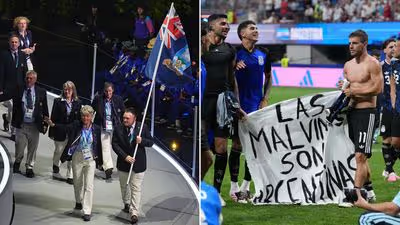
Falkland Islands lawn bowlers have voiced anger after Argentina supporters displayed a banner reading "Las Malvinas son Argentinas" following England’s World Cup exit, saying the gesture politicised sport. Competing at the Glasgow Games, Falklands athletes — including singles player Cecil Alexander and the pair Kristiane Thorsen and Sharon Barnes — say they came to compete, not to be drawn into a decades‑old sovereignty dispute.
Falkland bowlers rebuke Argentina banner that invoked Malvinas dispute
What happened
Argentina supporters held aloft a banner reading "Las Malvinas son Argentinas" after England’s World Cup semi‑final defeat in Atlanta. The display has provoked anger among the small Falkland Islands contingent competing at the Glasgow Games, who say sport should remain separate from political disputes.
Falklands’ response
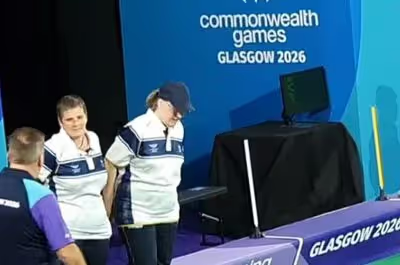
Singles star Cecil Alexander called the gesture “disappointing” and said the team keeps politics out of competition. Kristiane Thorsen and Sharon Barnes, who played as a pair at the Scottish Event Campus, declined to expand on the incident and pointed to team management for comment. Their message was clear: the Falklands athletes are focused on representing their territory on the green, not engaging in historical arguments.
Immediate sporting context
The Falkland Islands pair were beaten 2‑0 by Malaysia on rink one as the Glasgow Games got under way. For a tiny delegation, every match and every moment on the international stage is precious; distracting political rows risk overshadowing both individual performances and the profile small nations gain through sport.
Why the banner matters
The Malvinas/Falklands sovereignty dispute — a legacy of the 1982 conflict — remains an emotionally charged issue for many Argentines and islanders. When nationalist messaging appears at high‑profile sporting events, it reintroduces historical trauma and can inflame relations between competitors and fans. For athletes from contested territories, such displays are especially fraught: they shift attention from athletic endeavour to geopolitical symbolism.
What this means for sport
Sporting bodies aim to keep competition neutral, but fan actions and national narratives often spill over. The incident underlines an ongoing dilemma: how to protect athletes and the integrity of events while allowing legitimate national expression. For smaller teams like the Falklands, maintaining focus becomes a tactical challenge as much as an emotional one.
Looking ahead
Expect heightened sensitivity around crowd behaviour at international meets: organisers and team managers will need to reiterate codes of conduct and support athletes who become inadvertent symbols in wider disputes.
After World Cup setbacks, Messi and Ronaldo remain football's defining duo
For the Falkland Islands players, the immediate priority remains results on the green and preserving the sporting platform that gives them a voice.
 The Sun