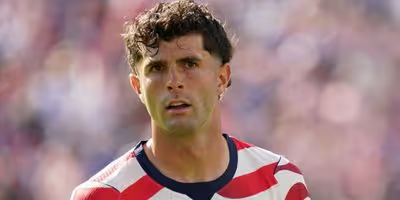
Jermaine Jones has stepped up to defend Christian Pulisic after intense backlash following the USMNT’s 4-1 World Cup last-16 loss to Belgium, arguing Pulisic remains the country’s finest player despite injury and a tough night. Tim Howard offered a sympathetic, measured view, while criticism from high-profile former players has reignited debate about leadership expectations and how American soccer treats its stars.
Jermaine Jones defends Christian Pulisic after World Cup exit
Jermaine Jones publicly pushed back against widespread criticism of Christian Pulisic following the United States’ 4-1 defeat to Belgium in the World Cup last 16. Jones framed the reaction as unfair, calling Pulisic the greatest American player of all time and urging respect for what he has accomplished for USMNT and beyond.
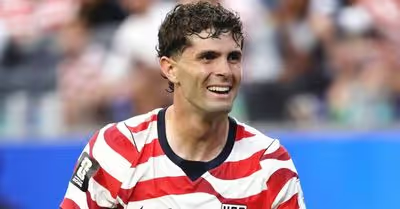
The exchange follows a volatile aftermath in which former stars such as Carli Lloyd and Landon Donovan openly criticised Pulisic’s performance and demeanour after the loss. Pulisic left the match after 59 minutes with a significant leg injury — later reported as a fracture and bone bruise — and those facts are central to Jones’s defense.
What Jones said and why it matters
Jones argued critics were selectively harsh and ignored collective failings, pointing to teammates who also had poor games. His blunt message — “Be careful throwing stones when you live in a glass house” — is as much about perspective as it is about Pulisic.
That line of defense matters because it reframes the debate. If the USMNT’s collapse was systemic rather than the failings of one star, national conversation should shift toward squad construction, tactical choices and mental resilience, not solely individual blame.
Tim Howard offers a measured, sympathetic take
Former US goalkeeper Tim Howard took a more nuanced view, suggesting Pulisic’s post-match demeanour reflected emotional defence and physical pain rather than indifference. Howard acknowledged the spotlight that comes with being the country’s foremost name — “To whom much is given, much is required” — and urged some empathy for a player injured and labelled the face of the team.
Howard’s perspective highlights a practical point: when elite players carry the team’s profile, they attract both praise and amplified criticism. That scrutiny can be corrosive when mixed with visible physical injury and a brutal tournament exit.
How the criticism unfolded
High-profile critiques were blunt: questions about leadership, competitiveness in big moments, and decisions to substitute or leave the field when the match was slipping away. Those criticisms have been amplified across social channels and punditry, feeding a narrative that Pulisic underdelivered.
Jones and Howard pushed back by shifting focus to the game as a team failure and underlining the role of injury and context — not as excuses, but as necessary nuance missing from some of the louder commentary.
What this means for Pulisic and the USMNT
For Christian Pulisic, the immediate priority is recovery and clarity about the injury. Beyond that, he faces a PR challenge: rebuilding public perception while managing the physical comeback. How he, his club and the national team communicate the rehabilitation process will shape the next chapter.
For the USMNT, the episode exposes a tension between expectation and reality. The team must answer tactical questions, improve defensive cohesion and reassert collective leadership so future setbacks don’t become single-player scapegoats.
Where the debate goes from here
Jones’s defense is a reminder that veteran voices can recalibrate public debate, insisting nuance over reactionary takes. Howard’s cautionary read — that elite players will always receive amplified blame — is equally instructive.
The practical takeaway: US Soccer and its supporters should direct scrutiny toward systemic fixes while allowing injured leaders time to recover reputationally and physically.
Jesus keeps Ronaldo in selection mix as he rebuilds Portugal and manages the transition to 2030
If handled well, Pulisic can return as both a player and a symbol of resilience; if mishandled, this could linger as a troubling moment in the nation’s tournament history.
 Givemesport